The Eighth GEF Assembly: A Pivotal Moment for Global Environmental Governance
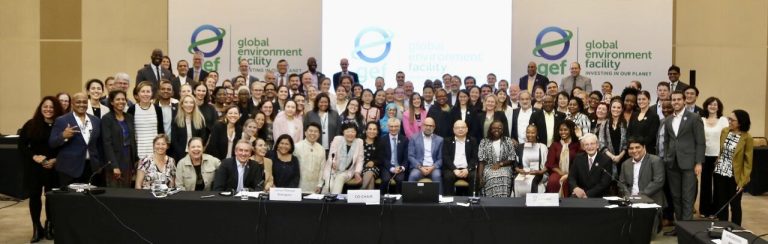
The historic city of Samarkand, Uzbekistan – a UNESCO World Heritage Site at the crossroads of the ancient Silk Road – is hosting one of the most consequential environmental gatherings of the decade. The Eighth Global Environment Facility (GEF) Assembly and Associated Meetings, running from 30 May to 6 June 2026, brings together ministers, heads of international organizations, business leaders, civil society advocates, Indigenous Peoples, women, and youth from all 186 GEF member countries to chart an accelerated path toward global environmental goals.
The GEF Assembly is the highest governing body of the GEF and convenes only once every four years. This edition carries particular weight: it is the first Assembly under the new GEF-9 funding cycle (2026–2030), and it arrives with just four years remaining to honor the promises of the 2030 Agenda for Sustainable Development. Against a backdrop of accelerating biodiversity loss, worsening climate impacts, and the unchecked spread of persistent pollutants, the Assembly’s unofficial motto – “Last Sprint to 2030” – captures both the urgency and the determination of those gathered in Samarkand.
“The Eighth Assembly comes at a pivotal moment. With just four years left to honor the promises of the 2030 Agenda, we must unite governments, the private sector, and civil society around a single Nature–Climate–Pollution framework and set in motion the large-scale, inclusive action our planet demands.”
— Claude Gascon, Interim CEO & Chairperson of the GEF
The Assembly’s programme includes nine high-level roundtables generating actionable technical and political recommendations, a dedicated Civil Society Organizations Forum, side events, and a final ministerial plenary. Host country Uzbekistan brings its own compelling story: since joining the GEF in 1995, it has received $98.8 million in GEF grants leveraging $773.8 million in co-financing, supporting work on rangeland restoration, biodiversity conservation, low-carbon transport, and the management of the Aral Sea Basin – one of the world’s most dramatic environmental recovery challenges.

The 71st GEF Council Meeting: Governing Body in Action
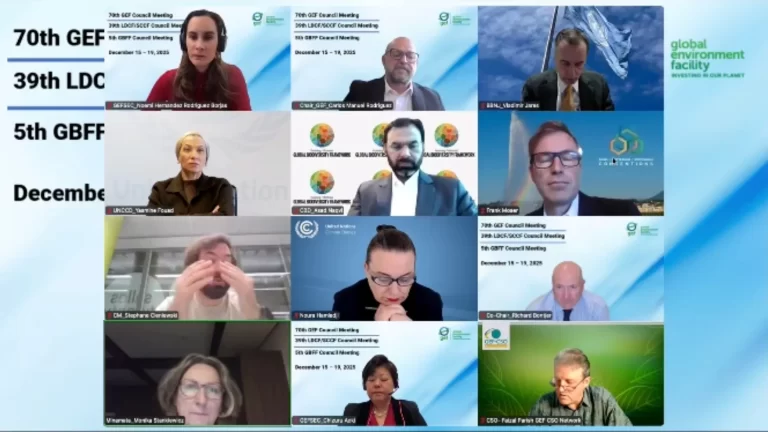
Running from 31 May to 3 June 2026 – immediately preceding the Assembly’s plenary days on 4–5 June – the 71st GEF Council Meeting is the formal governing body convening where critical decisions are taken on funding, programming, and policy. The Council comprises 32 members appointed by constituencies of GEF member countries (14 from developed countries, 16 from developing countries, and two from economies in transition) and customarily meets twice annually.
At this session, country representatives are reviewing a proposed allocation of $129.5 million from the GEF Trust Fund, alongside $64.7 million from the Least Developed Countries Fund (LDCF), $2.9 million from the Special Climate Change Fund (SCCF), and $20.5 million from the Global Biodiversity Framework Fund (GBFF) – a combined package exceeding $200 million. Delegates are also formally approving individual country pledges to the GEF-9 replenishment and endorsing the programming directions that will guide four years of environmental investment.
GEF-9: A HISTORIC REPLENISHMENT
On 9 April 2026, donor countries pledged an initial $3.9 billion to GEF-9 — the ninth replenishment cycle covering July 2026 through June 2030. Additional pledges are being formally announced at the Samarkand Council meeting. The replenishment represents a powerful collective commitment to multilateral environmental cooperation at a time of competing global priorities. Since its founding, the GEF has provided more than $27 billion in financing and mobilized $155 billion in co-financing for country-driven environmental priorities.
The 6th Global Biodiversity Framework Fund (GBFF) Council is also meeting in Samarkand on the sidelines of the Assembly, reviewing programming directions designed to accelerate implementation of the Kunming-Montreal Global Biodiversity Framework, including its target to protect 30% of the planet’s lands and oceans by 2030.
The GEF CSO Network: Who We Are and Why We Are Here
The GEF CSO Network (GCN) is the official civil society constituency of the Global Environment Facility. The Network brings together hundreds of civil society organizations from across the GEF’s 186 member countries, serving as the primary channel through which NGOs, community-based organizations, and Indigenous Peoples’ groups engage with GEF governance and programming at the global, regional, and national levels.
The GCN’s mission is threefold: to ensure that civil society, Indigenous Peoples, local communities (IPLCs), women, and youth have a meaningful voice in GEF decision-making; to strengthen the accountability and effectiveness of GEF investments on the ground; and to build civil society capacity to participate in and benefit from GEF programming. The Network operates on the principle that environmental outcomes are most durable when those most affected by environmental degradation — local and indigenous communities — are at the center of design, implementation, and monitoring.
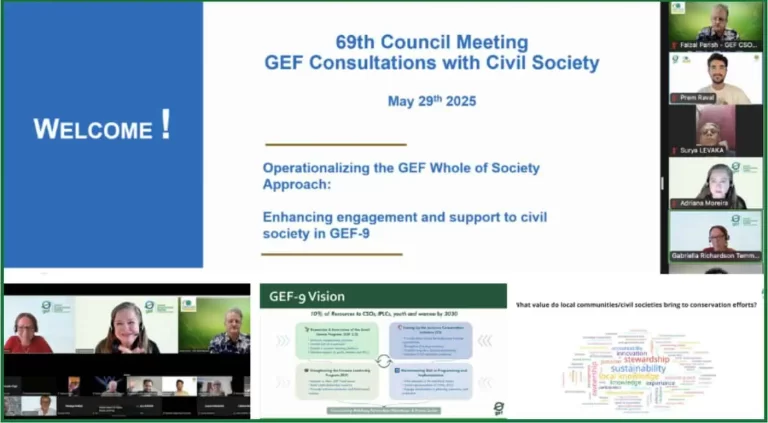
At each GEF Council meeting, the GCN delivers formal statements on all key agenda items. These statements represent the consolidated positions of the Network’s membership and are the product of extensive prior consultation among CSOs across regions. They are submitted to the record and delivered orally before the full Council, carrying the weight of the civil society constituency’s collective voice in an intergovernmental process.
“The GEF CSO Network welcomes the GEF-9 replenishment and its commitment to strengthening a whole-of-society approach. We particularly value the goal of allocating 20 percent of resources to support Indigenous Peoples and local communities, alongside expanded engagement with civil society, women, and youth.”
— Faizal Parish, Chair, GEF CSO Network

Key Achievements: What Civil Society Secured in GEF-9
The GEF-9 replenishment process, which concluded with the April 2026 pledging conference, reflects 18 months of intense negotiations in which the GEF CSO Network actively participated across all replenishment meetings. The result is a funding package that contains a number of landmark provisions for inclusive conservation and civil society engagement — achievements the Network is proud to highlight at the Samarkand Assembly.
- 20% Aspirational Target for IPLCs: GEF-9 establishes an aspirational target directing 20% of GEF-9 programming toward actions by Indigenous Peoples and local communities. This brings the GEF Trust Fund into alignment with a commitment made four years earlier for the Global Biodiversity Framework Fund and marks a historic step toward placing IPLCs at the center of environmental programming.
- $100 million Inclusive Conservation Initiative: GEF-9 allocates $100 million specifically to support the GEF Inclusive Conservation Initiative, which directly finances actions by Indigenous Peoples. This represents a 300% increase over the allocations in GEF-7 and GEF-8 combined.
- Updated Indigenous Peoples Guidelines: The replenishment commits to updating, by mid-2027, the 2012 Principles and Guidelines for Engagement with Indigenous Peoples, ensuring they reflect contemporary best practice and the provisions of UNDRIP.
- Refinement of Financing Mechanisms: By 2028, GEF will refine all relevant financing mechanisms, policies, and guidelines to ensure their responsiveness to the needs of IPLCs, women, and youth.
- STAR Resources for the Small Grants Programme: From the start of GEF-9, recipient countries will be able to direct a portion of their STAR (System for Transparent Allocation of Resources) allocations to enhance Small Grants Programme (SGP) funding in their countries — a significant new flexibility that can help address the real-terms decline in SGP purchasing power.
- Strengthened NGO and CSO Execution Roles: GEF-9 programming documents include an explicit call for strengthening the execution roles of regional and national NGOs and CSOs in SGP programming, recognizing their comparative advantage in reaching communities.
- Civil Society Participation in Replenishment: The GEF facilitated GCN participation in all GEF-9 replenishment meetings — a demonstration of GEF’s commitment to the Whole of Society Approach that the Network has championed.
The GCN recognizes these achievements while also calling for continued ambition. The overall GEF-9 resource level, while significant, does not yet match the scale of environmental challenges facing recipient countries. Furthermore, several previously core donor countries have yet to finalize their pledges for GEF-9, and the Network is urging them to do so promptly to enable effective planning.
Civil Society Forum and the Road to the Assembly Plenary
On 3 June 2026, the GEF is hosting a dedicated Civil Society Forum co-organized with the GEF CSO Network and the Indigenous Peoples Advisory Group (IPAG). Scheduled from 14:00–18:00 YEKT in the Diamond Room of the Expo Centre Silk Road Samarkand, the forum brings together CSOs, Indigenous Peoples representatives, local communities, women’s organizations, and youth from across the GEF constituency.
The forum is structured around two moderated interactive dialogues, with welcoming remarks provided by the GEF’s Interim CEO and by Uzbekistan’s Advisor to the President on Environmental Matters. Its express purpose is to generate clear, actionable inputs for Assembly interventions and to finalize the Civil Society Statement to be presented on the opening day of the GEF Assembly Plenary on 4–5 June. The Forum represents a key opportunity for civil society to shape the political outcomes and commitments that emerge from the Assembly.

Looking Ahead: Assembly Plenary and Beyond
The Assembly Plenary convenes on 4–5 June 2026, bringing together ministers and senior officials from all 186 GEF member countries. It will receive the outcomes of the Council meetings, formally adopt the GEF-9 programming directions, hear the Civil Society Statement developed through the June 3 CSO Forum, and generate the political commitments and declarations that will guide global environmental investment through to 2030.
For the GEF CSO Network, the Eighth Assembly represents both an accounting of what civil society has achieved in GEF-9 and a platform to set the tone for the years ahead. The Network will monitor closely whether the commitments made in the replenishment – particularly the 20% IPLC aspirational target and the $100 million Inclusive Conservation Initiative – are translated into robust implementation frameworks, clear tracking mechanisms, and genuinely inclusive project design.
As the world enters the final lap of the 2030 Agenda, the work of civil society – in holding governments accountable, reaching communities that no formal mechanism can reach alone, and ensuring that environmental finance flows to those who need it most – has never been more important. The GEF CSO Network is here in Samarkand to make that case, and to build the partnerships that will carry it forward.
This article will be updated as additional statements are delivered and as the Assembly progresses. Check back for the full record of GCN interventions at the 71st GEF Council Meeting and the Eighth GEF Assembly.
GEF CSO Network Statements at the 71st GEF Council Meeting
Throughout the 71st GEF Council Meeting, Network representatives are delivering formal oral statements on the Council’s agenda items. These statements articulate the positions and priorities of the GCN membership on GEF programming directions, policy amendments, budget allocations, and fund management – from the LDCF and SCCF to the GBFF. Each statement is carefully prepared through consultation among CSO members and speaks on behalf of the broader civil society constituency.

The statements are made available below as downloadable documents for Network members, partner organizations, and observers following the Council proceedings. Additional statements will be posted as they are delivered across the Council sessions.
GEF CSO Network Statements
71th GEF Council Meeting, May 31- June 3, 2026