Introduction
“Inclusion is not just a principle. It’s the foundation of effective climate finance.”
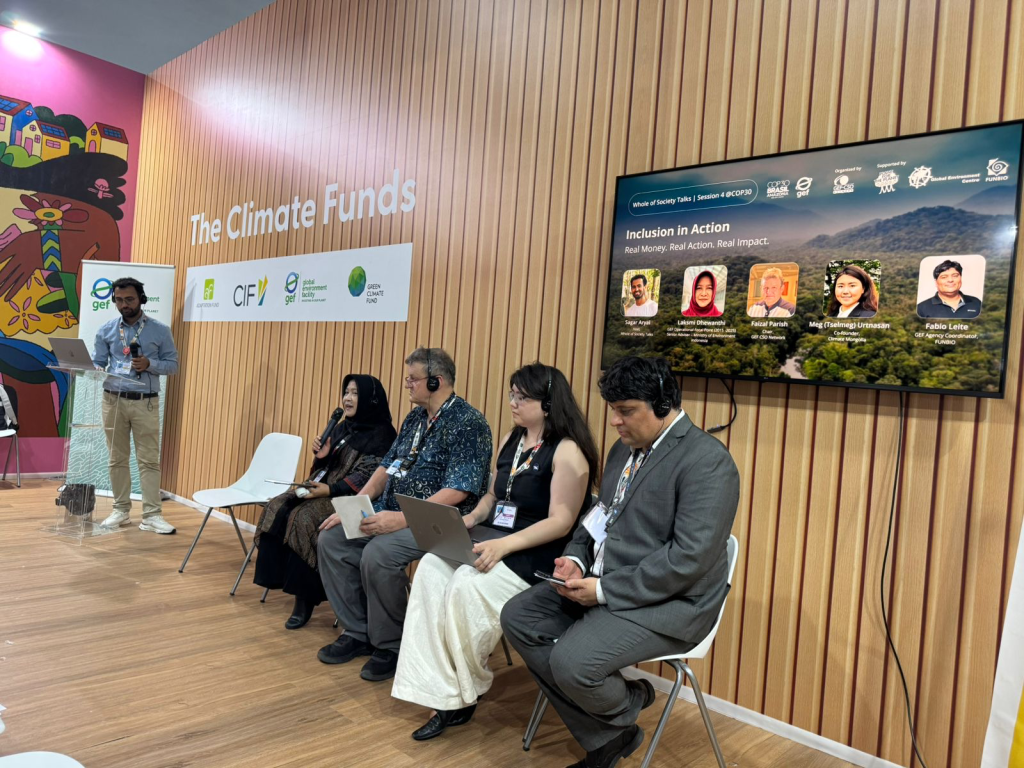
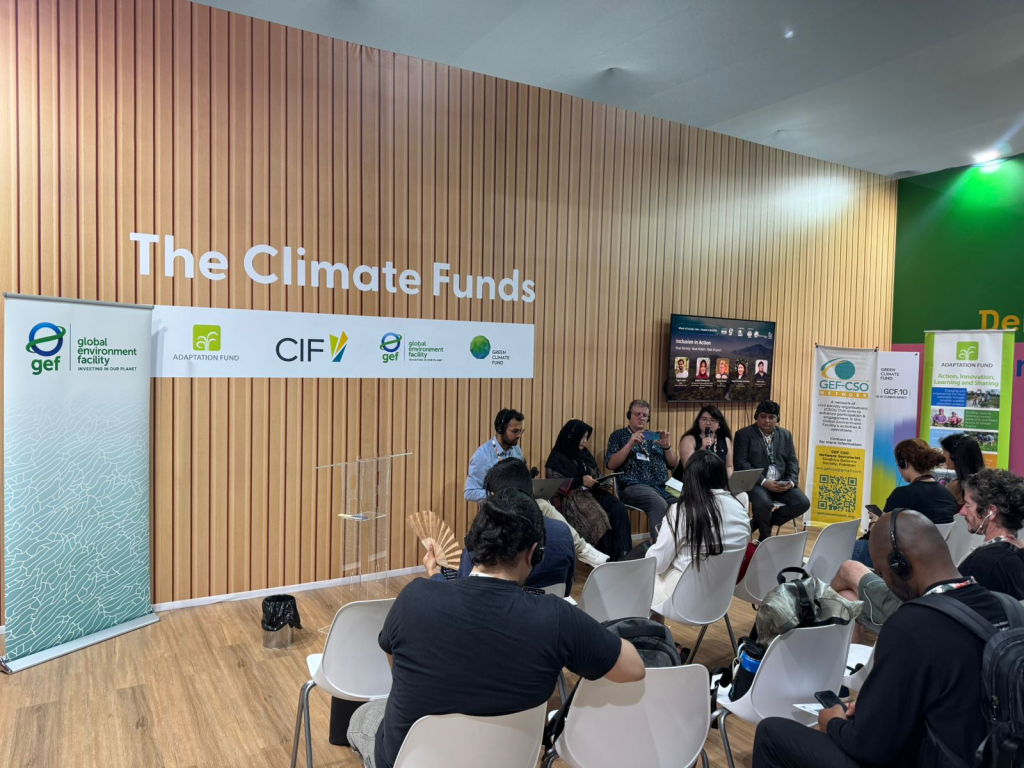
These powerful words opened Session 4 of the Whole of Society Talks — a special event at COP30 hosted by Sagar Aryal, from the GEF Civil Society Organization (CSO) Network. Set against the vibrant backdrop of Belém, Brazil, this session wasn’t about lofty ideals or polite applause. It was about action.
As the Global Environment Facility (GEF) enters its ninth programming phase (GEF-9), the stakes are high. Billions in climate finance are being mobilized to fight biodiversity loss and global warming. But who receives these resources? Who implements the solutions on the ground? And how can finance architectures be restructured to center the very communities driving real climate impact?
🎯 Objectives of the Session
This dialogue aimed to:
- Center diverse voices — youth, Indigenous Peoples, civil society, GEF agencies, and recipient governments — in shaping GEF-9 implementation.
- Reflect on what’s working, and where barriers still remain.
- Make a clear call for 10% of GEF-9 resources to go directly to civil society and community-led initiatives.
- Move from consultation to co-creation, direct access, and local leadership.
🎙️ Speakers & Stakeholder Perspectives
The session brought together government leaders, implementation agencies, youth activists, and civil society, moderated by the GEF CSO Network leadership team.
1. Laksmi Dhewanthi
Senior Advisor, Ministry of Environment, Indonesia
As a long-standing GEF partner, Indonesia presented a government’s perspective. Laksmi emphasized that inclusion must begin at the policy design stage and continue through local delivery mechanisms. She highlighted successful national frameworks that integrate civil society into environmental governance, but also called out gaps in implementation where community voices risk being sidelined.
2. Fabio Leite
GEF & GCF Agency Coordinator, FUNBIO (Brazil)
Fabio shared practical insights from FUNBIO — an implementing agency that channels almost all its funding through CSOs. He showcased concrete projects that empowered local actors in the Amazon and discussed the systems needed to make funding truly accessible.
Key Takeaways:
- Simplified access procedures do not mean weaker accountability.
- Pre-financing, small grant facilities, and coaching can de-risk CSO partnerships.
- FUNBIO’s model shows that when trust meets design, civil society delivers stronger results.
3. Faizal Parish
Director, Global Environment Centre & Chair, GEF CSO Network
Faizal laid out a bold vision: at least 10% of GEF-9 resources should go directly to communities as well as enhance the engagement of CSOs across the entire portfolio. He argued that tokenism must give way to tangible participation — through roles in project monitoring, co-design processes, and dedicated funding streams.
He also announced the CSO Network’s intent to track and report inclusion progress throughout GEF-9, creating an accountability mechanism from civil society itself.
4. Meg (Tselmeg) Urtnasan
Co-Founder, Climate Mongolia | Youth NDC Negotiator
Representing youth perspectives, Meg highlighted the energy and innovation that young organizations bring. But barriers remain: from complex proposals to eligibility criteria that exclude youth groups.
She urged the GEF to:
- Embed youth in implementation, not just consultation.
- Create on-ramps for small organizations and first-time applicants.
- Prioritize knowledge sharing, mentorship, and flexible funding windows.

Themes Explored
| Theme | Key Discussion Points |
|---|---|
| From Policy to Practice | Even with inclusive policies, implementation mechanisms often fail to deliver for local actors. |
| Operationalizing Inclusion | Inclusion must be embedded in how funds are disbursed, monitored, and evaluated. |
| Barriers to Access | CSOs face hurdles like high administrative burdens, lack of pre-financing, and rigid proposal structures. |
| Scaling What Works | Agencies like FUNBIO are proving inclusion works — the task now is replicating and adapting these models globally. |
| Measuring Impact | Inclusion isn’t just about process — it must lead to measurable outcomes on equity, biodiversity, and climate resilience. |
💡 Inclusion must deliver trust, money, and measurable results — not just rhetoric.
As GEF-9 unfolds, civil society is not waiting on the sidelines — it’s stepping forward.
Catch Up on Previous Sessions
Here are the recordings from earlier Whole of Society Talks: Session 3, Session 2, Session 1
Session 5 — December 12, 2025
Online, ahead of the GEF Council Meeting
Session 5 will bring together Council Members, the GEF CEO Carlos Manuel, and Network representatives to discuss concrete pathways for implementation and inclusion across GEF-9.
Register here